

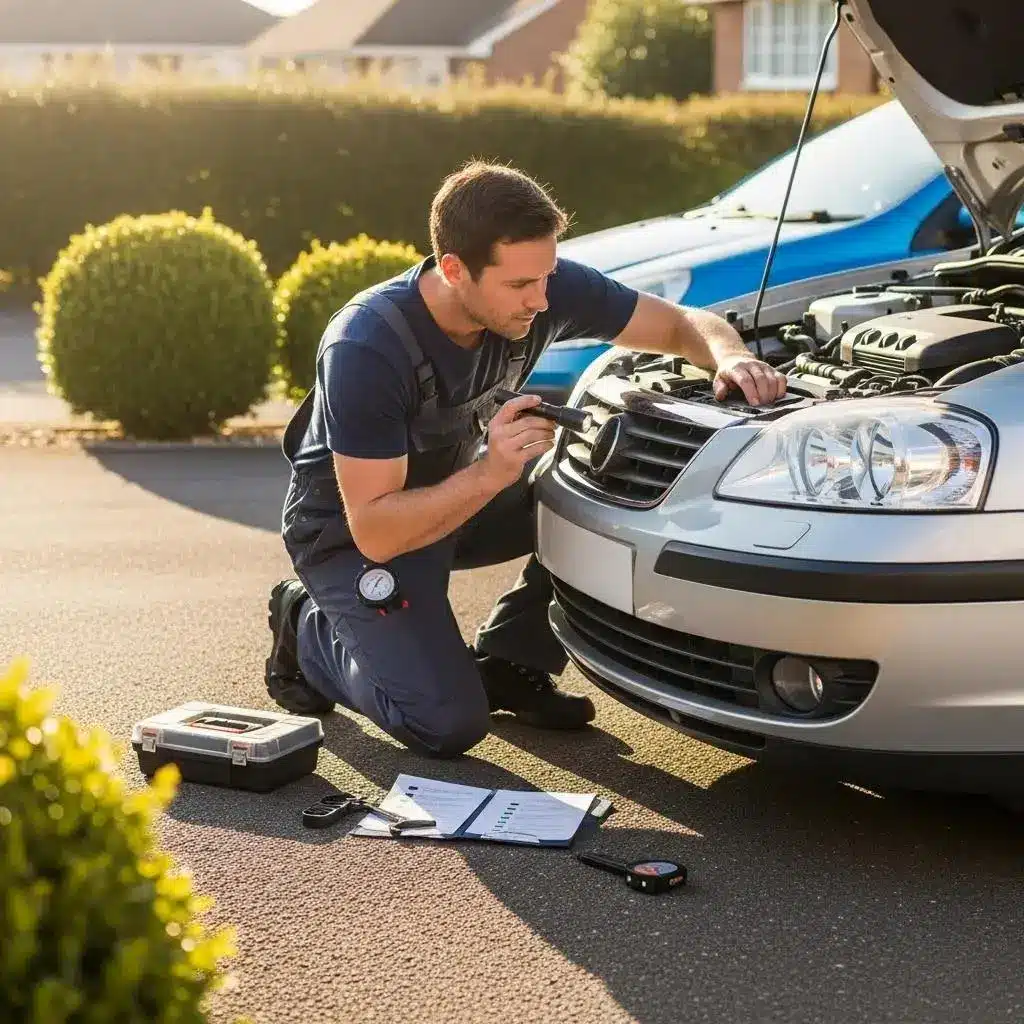


White exhaust vapour can be harmless condensation or the first sign of a serious engine problem. Knowing the difference protects your car and your wallet. This guide explains what white smoke from the tailpipe usually means, how to tell brief cold-start steam from burning coolant, and the straightforward checks you can do at the roadside.
You’ll get clear causes, from damp mornings to coolant entering cylinders, plus practical diagnostic checks and simple guidance on when to stop driving and book a professional inspection. We cover quick home checks, symptom-to-test mappings, likely repairs and routine servicing advice for modern and classic cars.
What causes white smoke from your car’s exhaust?
White exhaust smoke is the visible vapour or steam coming from the tailpipe. It ranges from brief, thin steam on cold starts (harmless condensation) to persistent, dense white smoke when coolant or water reaches the combustion chamber.
Noting how the smoke looks and when it appears helps you prioritise checks and avoid further engine damage. Below are the most common causes and why each produces white smoke.
White exhaust smoke usually stems from three main causes:
- Condensation on cold starts: thin, short-lived steam that disappears as the engine warms up.
- Coolant entering the combustion chamber: continuous, thick white smoke**,** often with a sweet smell from burning antifreeze.
- Structural engine faults (blown head gasket, cracked block, damaged cylinder head): sustained smoke accompanied by overheating and loss of coolant.
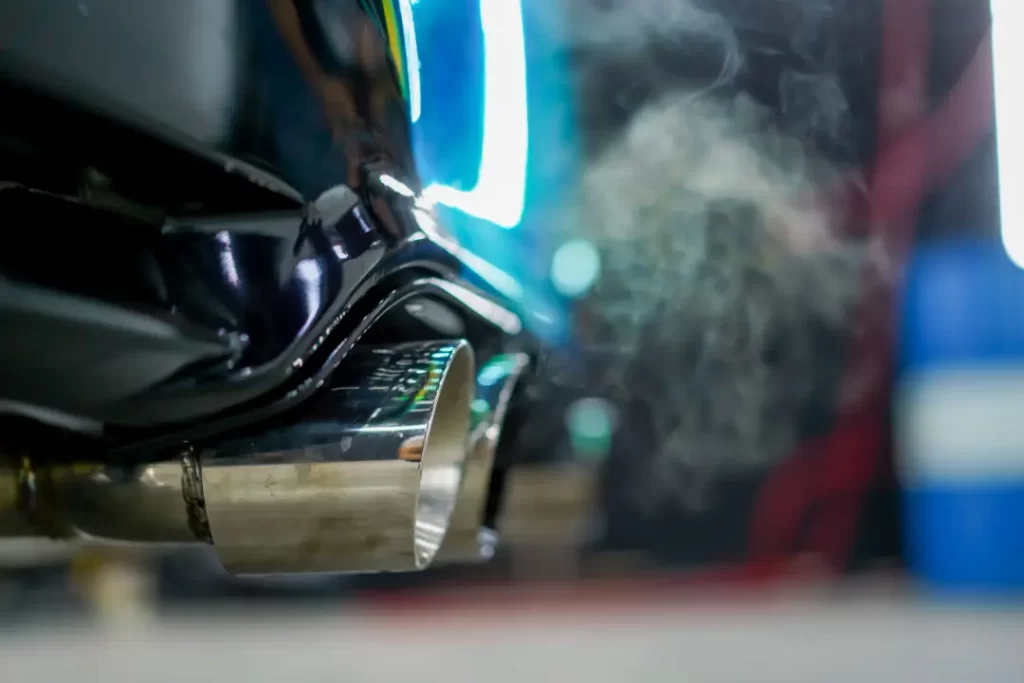
Those differences point to straightforward checks you can run next, for example, checking the coolant level and noting any unusual smells, summarised in the table below.
| Cause | Smoke Appearance | Common Symptoms | Urgency |
|---|---|---|---|
| Condensation | Thin, translucent steam on cold start | Clears quickly; no sweet smell; temperature stays normal | Low, keep an eye on it |
| Coolant in combustion chamber | Thick, billowing white smoke | Sweet or syrupy smell, falling coolant level, overheating | High, stop driving and get it checked |
| Blown head gasket / cracked head | Continuous white smoke, bubbles in coolant | Milky oil, loss of compression, persistent overheating | Very high, choose towing and prompt repair |
How long the smoke lasts, any smells, and the condition of coolant and oil are the key clues. The next sections explain quick checks you can do safely to decide whether the vapour is harmless or a sign of coolant ingress.
Is white smoke from the exhaust normal or just condensation?
Thin white vapour on a cold morning is usually normal: warm exhaust meeting cool air creates short-lived steam that clears once the engine reaches operating temperature. Condensation-related smoke doesn’t smell sweet or chemical and won’t occur alongside falling coolant or overheating.
A quick on-the-road check is to note whether the smoke disappears after a short warm-up and whether the temperature gauge stays steady, if so, it’s likely condensation. If the vapour continues, smells odd, or the temperature rises, you should run further checks.
How do coolant leaks and engine problems cause thick white smoke?
If coolant finds its way into a combustion chamber, it vaporises under heat and pressure and exits as dense white smoke, often with a sweet, antifreeze-like smell. This usually happens when a head gasket has failed, a cylinder head is cracked or warped, or a block is damaged, allowing coolant to pass into the cylinders during compression.
The result is overheating and persistent white smoke that won’t clear with warm-up. Because continued running with coolant in the engine accelerates damage, quick diagnosis helps limit repair costs.
What are the signs of a blown head gasket or coolant leak in your car?
A blown head gasket or internal coolant leak produces a cluster of easy-to-spot symptoms. The most reliable indications are persistent white smoke, unexplained coolant loss, engine overheating and oil that looks milky because coolant has mixed with it.
Spotting several of these together strengthens the case for internal leakage and helps you decide whether to stop driving and book a diagnostic. The checklist below gives quick, practical signs to prioritise before you visit a workshop.
- Persistent white smoke from the exhaust: continues after warm-up and may be heavy.
- Milky or frothy oil on the dipstick: a clear sign coolant has contaminated the oil.
- Rapid or unexplained drop in coolant level: frequent top-ups without visible external leaks.
Those indicators point to internal leaks rather than simple hose failures. Use the at-home checks below to gather evidence before booking a diagnosis.
Before a garage visit, run a few quick checks that give useful diagnostic clues; the table below maps symptoms to safe, straightforward tests you can do yourself or report to a technician.
| Symptom | What to Check | Diagnostic Test/Check |
|---|---|---|
| Milky oil on the dipstick | Visual oil inspection | Wipe the dipstick and inspect; creamy residue suggests coolant contamination |
| Bubbles in coolant reservoir | Combustion gas in the cooling system | With a cold engine, remove the cap and watch for steady bubbles while idling |
| Persistent white smoke | Exhaust inspection | Note duration, smell, and whether smoke increases with revs |
| Overheating | Temperature monitoring | Watch the temperature gauge and note when spikes occur |
What symptoms indicate a blown head gasket or damaged cylinder head?
Signs that point strongly to a head gasket failure or a damaged cylinder head include loss of compression in one or more cylinders, white smoke together with overheating, and oil that looks like a creamy latte on the filler cap or dipstick. Compression loss shows up as reduced power, misfires under load and rough idling.
Milky oil means coolant has mixed with the oil, the engine will need an oil change and further inspection. If you see these symptoms together, avoid long journeys and keep engine revs low to reduce the risk of severe damage. These observations guide technicians to targeted tests such as cylinder compression and leak-down checks to confirm the fault.
How can you identify a coolant leak causing white exhaust smoke?
Start with simple visual and sensory checks: check the coolant level, look for puddles under the car and see if the exhaust smells sweet (antifreeze). Track the reservoir level over a few short drives, a steady drop usually means internal loss rather than an intermittent external drip.
For confirmation, a cooling-system pressure test and a compression test are the most reliable ways to show whether combustion gases are entering coolant passages. If these checks point to internal leakage, book a diagnostic promptly to avoid engine seizure and rising repair costs.
How can you stop white smoke from your car’s exhaust?
Stopping white smoke depends on the cause. If it’s condensed, no repair is needed beyond normal warm-up. If coolant or a head gasket is at fault, repairs may range from cooling-system component replacement to head gasket or cylinder head work.
Immediate steps are: stop driving if the smoke is thick or the engine is overheating, check coolant and oil for contamination, and arrange towing rather than risk further damage.
Regular coolant checks and scheduled servicing reduce the chance of head gasket failure, and modern diagnostics speed up accurate fault identification. The table below outlines typical services, the usual fixes and when to book them.
| Service | Typical Fix | When to Book |
|---|---|---|
| Cooling system repair | Replace hoses, thermostat, water pump, radiator | If you have external leaks or overheating without white smoke |
| Head gasket replacement | Remove head, machine/replace gasket, pressure-test | If you have persistent white smoke, milky oil or compression loss |
| Diagnostic and pressure testing | Locate leak with pressure and compression tests | If symptoms are unclear or intermittent |
Which repair services fix white smoke issues in Tonbridge?
Workshops that handle white smoke focus on accurate diagnosis first, then the right repair route: cooling-system repairs for external leaks, or head gasket and cylinder head work for internal coolant ingress.
Typical diagnostics include a visual car inspection, pressure-testing the cooling system, compression or leak-down tests and engine electronics checks to rule out sensor or fuelling problems.
Specialist garages experienced with classic cars will adapt repairs to preserve originality where needed. Sovereign Motor Engineers in Tonbridge offer diagnostics and repairs for cooling systems, head gasket work and classic engines to make vehicles safe and reliable again.
How does regular servicing prevent white exhaust smoke problems?
Regular servicing cuts the risk of white smoke by catching worn or weakened parts before they cause internal leaks or overheating. Routine checks should include coolant flushes, hose inspections, thermostat and water-pump checks, and regular oil changes to avoid contamination.
If servicing includes coolant-condition checks and pressure testing when symptoms appear, small issues can be caught before they become major failures.
MOT checks and scheduled diagnostics help maintain engine efficiency and prevent condensation from being mistaken for a more serious fault. This is especially important for classic cars, where aging gaskets and cooling components need specialist attention.
When should you seek professional help for white exhaust smoke?
Seek professional help promptly if white smoke continues after warm-up, is thick, or comes with overheating, milky oil, falling coolant or loss of power. Those signs point to coolant in the combustion chamber and delaying diagnosis risks warped heads, seized pistons or cracked blocks, far costlier repairs.
A professional diagnostic narrows the cause quickly with targeted tests, avoiding unnecessary part swaps, and determines whether the fix is a cooling-system repair or a head gasket/cylinder head rebuild. When in doubt, especially if safety is affected, contact an experienced diagnostics specialist.
Key thresholds for professional intervention:
- Persistent, thick white smoke that does not clear after warm-up.
- Engine overheating, repeated coolant top-ups, or milky oil on the dipstick.
- Loss of performance or new misfires paired with exhaust smoke.
Why is immediate diagnosis important for thick white smoke?
Immediate diagnosis matters because internal coolant leaks speed up engine wear and can cause catastrophic failure if combustion continues with coolant present. Early pressure and compression testing identifies whether the problem is an external leak, a failed head gasket or a more serious crack in the head or block, enabling targeted repairs that are usually cheaper than a full engine rebuild.
Acting quickly preserves components, keeps you safe and reduces roadside breakdown risk, cutting both downtime and overall repair cost. The section below explains how a Tonbridge specialist typically approaches diagnosis so you know what to expect when you book an inspection.
How do Sovereign Motor Engineers diagnose and repair white smoke issues in Tonbridge?
Sovereign Motor Engineers follow a step‑by‑step diagnostic routine: visual checks and coolant/oil inspection, cooling-system pressure testing, compression or leak-down testing, and electronic diagnostics to rule out sensors or fuelling faults.
Repairs range from replacing hoses, thermostats or water pumps to head gasket replacement and cylinder-head machining. Technicians with classic-car experience adapt procedures to protect originality while restoring reliability.
For local owners, Sovereign Motor Engineers provide clear estimates and straightforward explanations of findings and recommended work, helping you choose the right route for modern and vintage vehicles. If you see persistent white smoke, book a diagnosis with a specialist Tonbridge workshop to reduce risk and speed repair.
Sovereign Motor Engineers is an independent garage offering repairs, servicing and MOTs, with a specialism in classic and vintage cars and a focus on head-gasket and cooling-system diagnostics. Their local knowledge and diagnostic capability make them a sensible next step when roadside checks point to coolant ingress or a head-gasket issue.
- Do not ignore persistent white smoke: early diagnosis often prevents larger engine failures.
- Perform basic checks first: inspect for milky oil, low coolant and any sweet exhaust smell to help the workshop.
- Book diagnostics promptly: a targeted test plan avoids unnecessary parts replacement and cuts cost.
Frequently Asked Questions
What Should I Do If I Notice Persistent White Smoke From My Exhaust?
If white smoke continues after warm-up, stop driving and check for other signs: overheating, milky oil or a dropping coolant level. Persistent white smoke often means coolant is reaching the combustion chamber and your car needs a diagnostic straight away to avoid serious engine damage.
Can White Smoke Indicate A Problem With My Car’s Fuel System?
White smoke is most often linked to coolant, but fuel-system issues can sometimes produce white or pale vapour, for example, if the mixture is very rich or injectors are faulty. That said, a sweet smell and coolant loss point more directly to antifreeze. A professional inspection will pinpoint the exact cause.
How Can I Prevent White Smoke From My Car’s Exhaust?
Prevention comes down to regular maintenance: check coolant and oil, replace worn hoses and gaskets, and follow service intervals. Promptly investigate overheating or unexplained coolant loss. Regular servicing catches small problems before they become head-gasket or cylinder-head crack repairs.
Is It Safe To Drive My Car If It’s Emitting White Smoke?
If the smoke is light and disappears after warm-up, it’s usually safe to drive. If it’s persistent, thick or comes with overheating or milky oil, do not continue driving, have the vehicle inspected to avoid further damage and costly repairs.
Book a White Smoke Diagnostic in Tonbridge
White exhaust vapour is normal only if it’s thin and clears after warm-up. If it’s thick, persistent, smells sweet, or comes with low coolant, overheating, misfires, or milky oil, stop driving and get it tested fast, that usually points to coolant entering the engine and can cause major damage.
If the smoke doesn’t clear, book a diagnosis with Sovereign Motor Engineers in Tonbridge. We’ll pressure-test the cooling system and run compression/leak-down checks to find the cause and fix it before it turns into a bigger bill.