


Failing an MOT means the tester has found faults that stop your vehicle from meeting legal safety and emissions standards. Your priorities are staying safe and understanding what the VT30 failure certificate tells you.
In this guide, we explain what an MOT failure means, how to read your VT30, the legal rules on using a failed vehicle, and the practical repair and retest choices available.
You’ll see the difference between Dangerous, Major, and Minor defects, learn the steps to get repairs and a retest, and find simple pre-MOT checks to lower the risk of failing. You’ll also find quick next steps and local options if you’re in Tonbridge or nearby, so you can act safely and without delay.
What Are The Mot Failure Categories, And What Do They Mean?
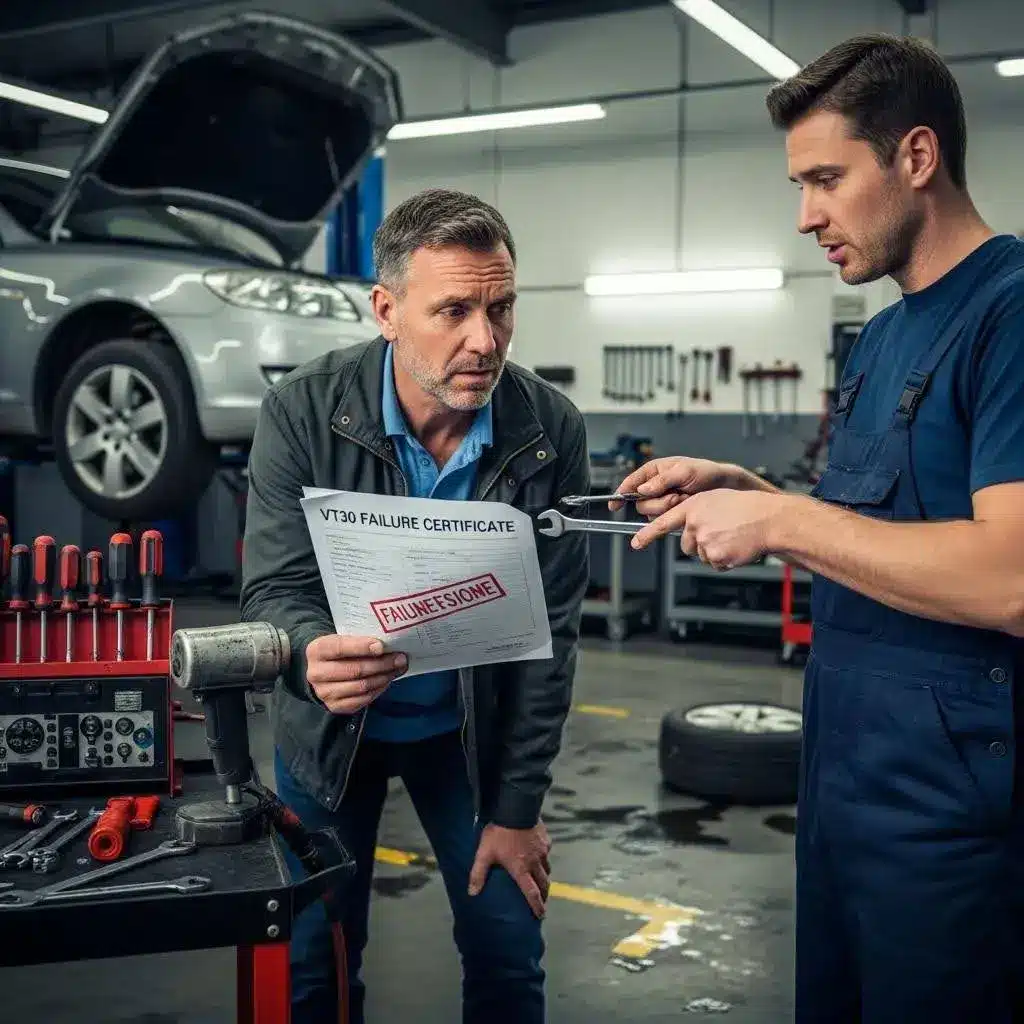
The VT30 failure certificate records faults under three headings, Dangerous, Major, and Minor, and notes what you must do next. Dangerous defects mean the vehicle is an immediate risk and should not be driven; instead, arrange for recovery to a garage.
Major defects cause the test to fail and must be repaired before a valid MOT can be issued. Minor faults are recorded as advisories; they don’t make the car fail immediately, but should be monitored or fixed.
Knowing the category helps you prioritise repairs and decide whether to arrange recovery or to drive the vehicle legally to a repairer. Use the short reference below to plan your next move.
The VT30 explains what the tester found and gives guidance on retesting and repairs, so read it carefully: it shows the test centre details, the fault descriptions, and the category. That wording tells you whether you can legally drive the car or need to have it collected.
Keep the VT30 with your vehicle records and bring any repair receipts if you return for a retest; it avoids confusion about what’s been done.
Practical examples make the categories easier to spot. Dangerous faults include issues such as exposed wiring, fuel leaks, or severe brake failure that could cause immediate harm. Major faults cover serious issues such as badly worn brake pads or major suspension defects that impair safety.
Minor faults include small items like a misaligned headlamp or worn wiper blades, things to fix, but not immediately dangerous. Spotting where a fault fits helps you book urgent work first and schedule less urgent repairs later.
MOT defect categories and their legal implications:
| Defect Category | Immediate Action Required | Legal/Retest Implication |
|---|---|---|
| Dangerous | Do not drive; arrange recovery to a garage or test centre | Vehicle may be prohibited from use; immediate repair or recovery required |
| Major | Arrange repairs before a valid MOT can be issued | Fails MOT; retest required after repairs |
| Minor | Note and monitor; repair recommended | Advisory only; does not prevent a pass but should be addressed before it worsens |
This table shows how each category affects whether you can use the vehicle safely and legally, and what action to take next, helping you choose the right repair route.
What Are Your Repair And Retest Options After A Mot Failure?
After a failed MOT, you have a few practical choices: have repairs carried out at the test centre or a nearby garage (often allowing a free or partial retest), repair the car elsewhere and return for a retest within the test centre’s timeframe, or consider selling or scrapping if repairs aren’t cost-effective.
Repairs carried out at the test centre or an approved garage often qualify for a free or reduced retest on the failed items, often the fastest way back on the road. If you repair the vehicle elsewhere, check the partial retest rules and time limits so you remain eligible for a reduced fee; otherwise, you may have to pay for a full retest.
If repair costs exceed the car’s value, discuss selling or scrapping with a specialist.
If you plan to use a professional garage, compare options for cost, retest eligibility, and timing. The short table below helps you choose the best route for urgency and budget.
| Option | Typical Cost / Timeframe | Retest Eligibility |
|---|---|---|
| Repair at a local MOT and repair garage | Varies; often the quickest turnaround | Often, a free or partial retest is conducted if work is done on-site |
| Repair elsewhere (independent) | May be cheaper; timing varies | Partial retest possible if within the test centre’s time limits and rules |
| Sell / Scrap | Varies | No retest; sell or dispose of the vehicle in its failed condition |
On-site repairs typically offer the smoothest path to a free or partial retest. Off-site repairs can work too, but keep good paperwork and confirm retest timing with the test centre.
How Sovereign Motor Engineers Can Help With Repairs And Free MOT Retests
At Sovereign Motor Engineers in Tonbridge, we’re an independent service garage and MOT test centre offering repairs, clear pricing, and a free MOT partial retest when the required work is carried out with us.
Our process is simple: we diagnose the faults, give you an upfront estimate, and only start work with your permission, then use quality parts and complete a retest where eligible. That approach reduces repeat visits to the test centre and sets clear expectations on cost and timing.
To move from diagnosis to a retest quickly, call Sovereign Motor Engineers to discuss collection, repairs, and our free retest policy.
What To Know About Retesting If Repairs Are Done Elsewhere
If you have work completed at a different workshop, bring receipts and clear documentation of the work to the original test centre to show which faults were fixed and when; this affects retest eligibility.
Partial retest rules usually allow re-inspection of failed items without a full fee if done within the centre’s retest time window, but policies vary, so confirm requirements before you return. Keep every repair invoice and the original VT30 to speed the retest and avoid disputes about what was fixed.
Proper paperwork also helps if you change test centres or need to prove remedial work for resale.
Can You Legally Drive Your Car After It Fails An MOT?
Short answer: only in limited circumstances. You may drive a car that has failed an MOT only if the fault does not make it illegal to drive and the car is still roadworthy, and the journey is strictly to a pre-booked repair or to a place where it can be made roadworthy.
If the MOT has expired, driving is lawful only to a pre-booked MOT test or to a repairer to make the vehicle safe, provided there are no Dangerous defects. Always carry the VT30 and any booking confirmation when you travel after a failure to show the journey’s limited purpose. When in doubt, arrange recovery or towing to avoid legal and insurance issues.
When limited movement is allowed, follow sensible precautions: drive straight to your booked appointment or test centre, avoid busy roads and motorways where possible, and travel with another person if you can.
Keep the VT30 and proof of your booking handy in case you’re stopped. These steps reduce the risk of enforcement action and help keep you safe on the road.
When Is Driving Allowed After An MOT failure?
Driving is permitted after a failure only when the defect category and the vehicle’s MOT status allow it, typically for a booked repair or to the original test centre for a retest, and only if no Dangerous defect is present. If the MOT has expired, short direct movement to a repairer or for a booked MOT is allowed, provided the vehicle is roadworthy for that trip.
Carry proof of your booking and the VT30 to demonstrate the journey’s purpose. If a Dangerous defect is listed, do not drive the vehicle; arrange recovery to a garage or test centre instead.
What Are The Penalties For Driving With Dangerous Defects?
Driving with Dangerous defects can lead to heavy fines, penalty points, and possible prohibition of use; enforcement aims to remove immediate risks on the road. Insurers may refuse claims if you drive knowing the vehicle has Dangerous faults, leaving you financially exposed after an incident.
Beyond legal penalties, Dangerous defects are a serious safety risk, so arrange recovery or controlled repairs immediately. If you’re unsure how severe a fault is from the VT30, get professional advice or book a vehicle collection.
Most Common Reasons Cars Fail Mot — And How To Avoid Them
Many MOT failures come from a small set of recurring issues that are easy and often inexpensive to fix. Common culprits are lighting and signalling faults, brake problems, tyre tread and condition, suspension wear, and emissions or exhaust faults.
Regular maintenance and a short pre-MOT check catch worn bulbs, low fluids, and tyre wear that would otherwise cause a failure. The table below lists frequent failure items, likely causes, and quick checks you can do yourself.
| Component | Likely Cause | Quick Pre‑MOT Check |
|---|---|---|
| Lights & Indicators | Blown bulbs, wiring faults, or aim issues | Walk around the vehicle and check all lights and indicators |
| Brakes | Worn pads, low fluid, unusual noise | Check pedal feel and listen for squealing |
| Tyres | Low tread, uneven wear, damage | Measure tread depth and inspect sidewalls for cuts or bulges |
Simple checks and timely repairs can prevent most MOT failures and keep you safer between tests.
Which Issues, Lights, Brakes, Tyres, Or Suspension, Most Commonly Cause Failures?
Lights are easy to spot: blown bulbs, incorrect aim, or blown fuses are common and are usually quick to fix. Brakes fail because of worn pads, glazed discs, or fluid problems.
Check pedal travel and listen for unusual noises, and get a garage to inspect them if unsure. Tyres fail for insufficient tread depth, uneven wear, or visible damage; use a tread gauge or the 20p test and look for bulges or cuts.
Suspension and steering faults show up as poor ride quality or pulling and normally need a garage inspection to diagnose properly.
How Can Pre‑mot Checks Help Prevent Failure?
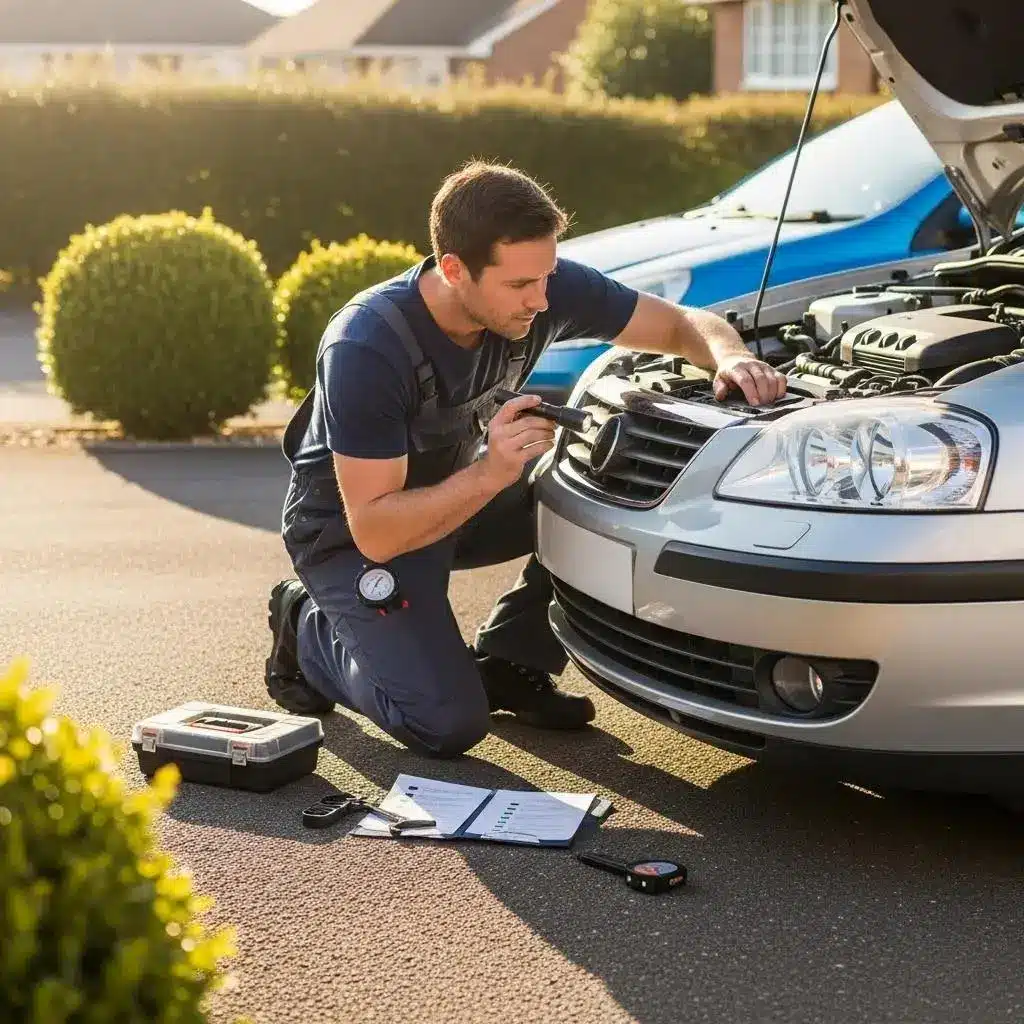
A short pre-MOT checklist, a day or two before the test, cuts the risk of an unnecessary failure by catching the common issues early and giving time for repairs. Do a quick walkaround: test every light, inspect tyres and tread depth, top up fluids, check wipers and washers, and listen for brake or suspension issues.
If you want extra reassurance, a professional pre-MOT check from a trusted garage will flag borderline items and provide an upfront quote to avoid surprises.
Booking pre-MOT checks and any needed repairs with a local specialist like Sovereign Motor Engineers also makes it easier to benefit from our free retest policy when you have work done on-site.
- Simple pre‑MOT checks reduce the chance of failing on test day.
- Professional pre‑test inspections spot issues DIY checks might miss.
- Documentation from pre‑MOT work makes any retest quicker and clearer.
These steps shorten the route from a VT30 failure to a successful retest and reduce both cost and disruption.
Frequently Asked Questions
What Should I Do Immediately After Receiving A VT30 Failure Certificate?
Read the VT30 carefully to see which faults are listed as Dangerous, Major, or Minor. That tells you how urgent the work is. If anything is marked Dangerous, don’t drive the car; arrange recovery to a garage. For Major faults, arrange repairs before you can get a valid MOT. Keep the VT30 with your vehicle records and contact a local garage for quotes and retest options.
How Long Do I Have To Get My Car Repaired After An MOT Failure?
There’s no universal deadline, but many test centres allow a retest on repaired items within a short period (often a few working days) without charging the full fee. As a practical rule, act quickly, especially for Dangerous faults. Always check the test centre’s retest rules and keep repair receipts to support your retest.
Can I Appeal a Motion Failure Decision?
Yes, if you believe the test was incorrect, first raise the issue with the test centre. If you remain unsatisfied, you can request an independent appeal or arrange a retest at another approved centre, but you’ll usually pay for the new test. It’s sensible to have any disputed faults inspected or repaired first to improve the chance of a pass.
What Are The Costs Associated With Repairing A Failed motor?
Repair costs vary widely: minor items like bulbs or wiper blades are inexpensive, while brakes or suspension work typically cost more. Get quotes from a few local garages to compare. Many garages offer free or reduced retests if the work is done on-site, which can lower your overall expense.