

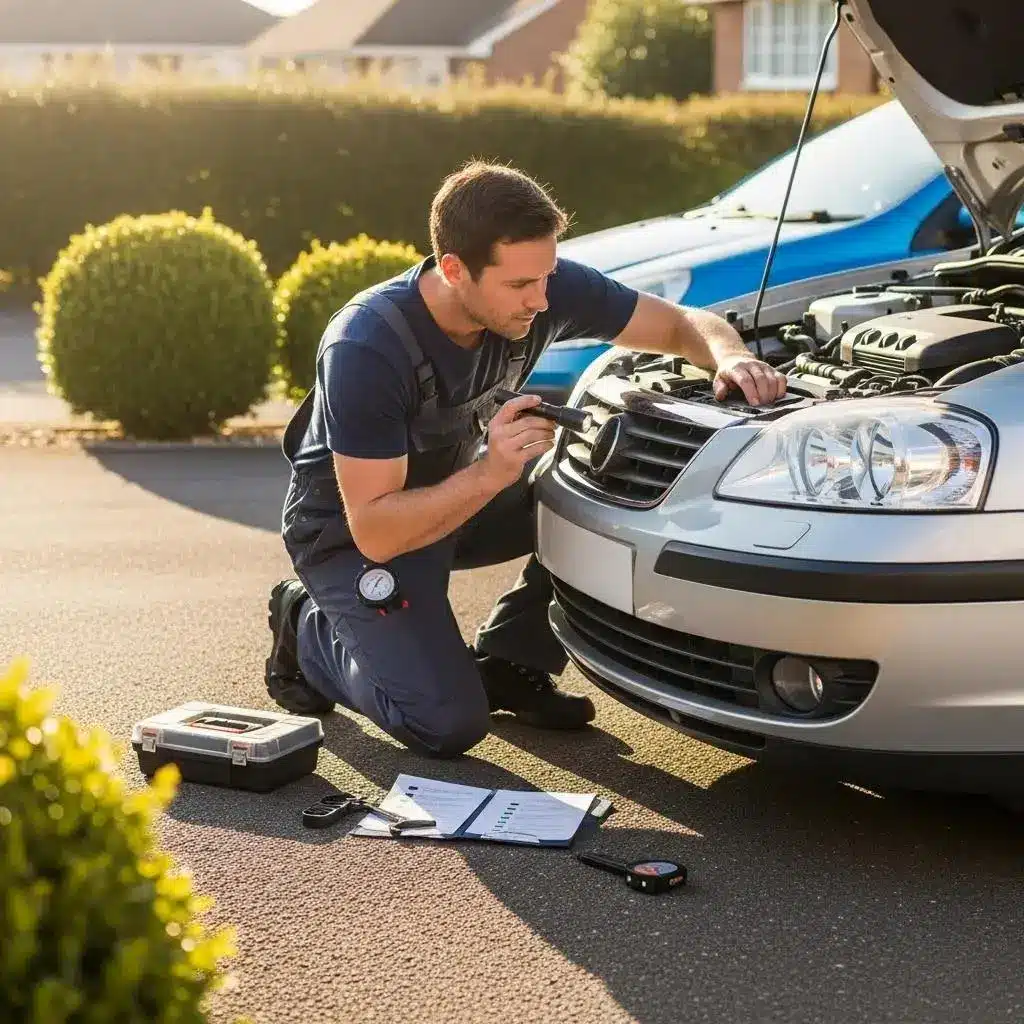

Cold weather stresses every part of a car. In this practical checklist, we cover battery care, tyre safety, antifreeze and oil choices, and the emergency kit essentials to reduce breakdown risk and keep you safer on winter roads.
How to Check and Maintain Your Car Battery for Winter?
Battery output falls in cold weather, so test voltage and cold cranking amps (CCA) monthly during the season. Clean corroded terminals with a baking soda paste, and consider a smart trickle charger if the car sits unused for long periods.
If you prefer professional help, winter servicing can test and replace batteries so your car starts reliably in cold weather. Signs of a Weak Car Battery in Cold Weather
Spot issues early to avoid being stranded. Watch for:
- Slow engine cranking: Slower than usual when you start the car.
- Dim interior or dashboard lights: Lights that dim during start often indicate low battery power.
- Warning lights on the dash: Any electrical-system warnings should be inspected promptly.
Addressing these signs gives time to test or replace the battery before cold weather worsens the problem.
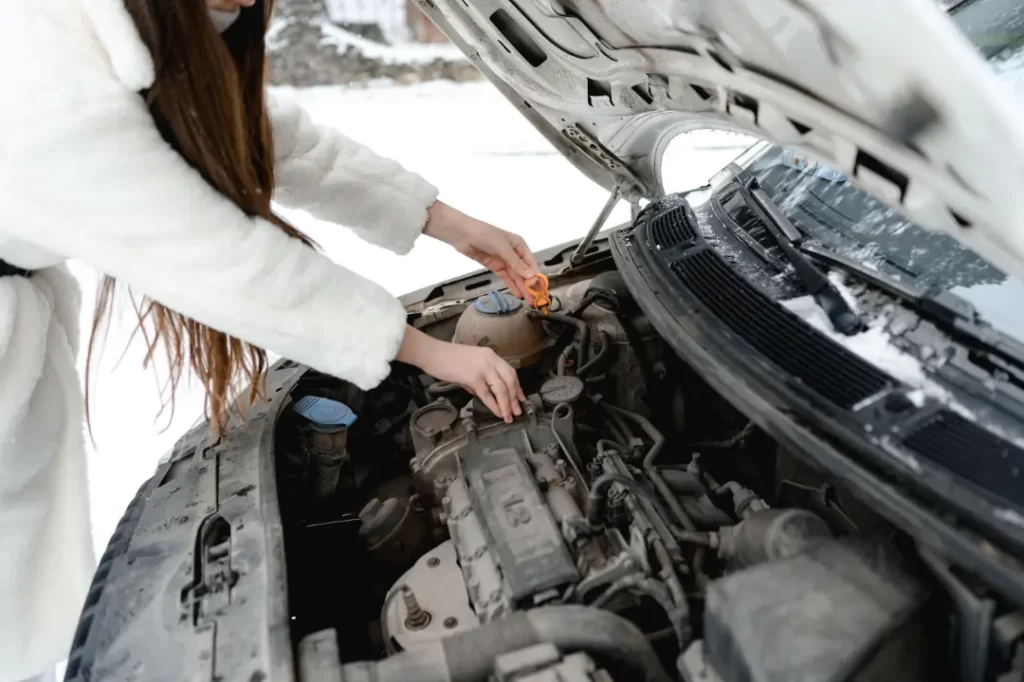
Test and Replace My Battery During Winter
Test monthly during the cold season, especially in colder climates. If you notice slow cranking, dimming lights, or warnings, have the battery tested and consider replacement. Most batteries last 3–5 years; replace older batteries before winter to reduce breakdown risk.
Essential Winter Tyre Safety Tips
Tyres are your car’s only contact with the road. Key checks:
- Check tread depth: Use a tread gauge to check tread depth, and aim for at least 3 mm on winter tyres.
- Monitor tyre pressure: Cold lowers pressure check and top up to manufacturer levels.
- Choose the right tyres: Winter tyres use softer compounds and deeper treads for improved cold-weather traction.
These steps improve handling, braking and overall safety on slippery roads.
Tyre Pressure Affects Winter Driving Safety
Correct pressure maintains the tyre’s contact patch. Underinflation reduces grip and increases stopping distances; overinflation reduces the contact area and harms traction. Check pressures as temperatures fall and set them to the manufacturer’s recommendations.
Switch to Winter Tyres in Tonbridge
In Tonbridge, fit winter tyres once temperatures consistently fall below 7°C, typically between October and April. Fitting them at the right time ensures the rubber compound and tread deliver reliable traction in cold conditions.
How Should I Use Engine Antifreeze and Oil for Cold Weather?
Use a 50:50 antifreeze/water mix to prevent freezing and maintain cooling. Choose engine oil rated for low temperatures, lower-viscosity oils flow better at cold starts and reduce wear. Check fluid levels regularly so cooling and lubrication systems perform properly in winter.
Best Types of Antifreeze for Winter Car Care
Consider these options:
- Pre-mixed 50:50 antifreeze: Ready to use and convenient for reliable freeze/boil protection.
- Ethylene glycol-based solutions: Common and effective at preventing freezing and reducing internal corrosion.
Choose the type recommended for your vehicle and verify compatibility before topping up.
Engine Oil Choice Affects Cold-Weather Performance
Oil viscosity matters: low-viscosity oils circulate faster at cold starts and reduce wear. Thicker oils can slow circulation until the engine warms. Follow your manufacturer’s winter oil recommendations or use a winter-grade oil when advised.
What Emergency Kits and Preparations Should I Have for Winter Driving?
A compact emergency kit can make a big difference. Essentials:
- Portable jump starter: Useful when the battery fails, and no other vehicle is available.
- Insulated blanket: Keeps occupants warm if stranded.
- High-visibility jacket: Increases visibility when you’re outside the vehicle.
Add non-perishable snacks, a torch with spare batteries, a basic first-aid kit, a small shovel, an ice scraper, and sand or kitty litter for traction.

Prepare My Classic Car for Winter Storage
For storage: wash and wax the body, stabilise fuel and top up fluids, and either disconnect the battery or keep it on a maintainer. Use a dry, climate-controlled space if possible, or a breathable cover to limit moisture and dust. These steps protect mechanicals and the finish over winter.
SM Engineers and the Services We Provide
At SM Engineers, we understand the challenges that winter weather poses to your vehicle. We specialise in comprehensive winter car maintenance services designed to keep your car running smoothly and safely throughout the cold months. Our expert team offers battery testing and replacement, tyre inspections and fitting of winter tyres, as well as advice on antifreeze and engine oil suitable for low temperatures.
We pride ourselves on providing reliable and professional service to help you prepare your car for winter conditions. Whether you need a full winter check-up, emergency kit recommendations, or classic car storage preparation, we are here to assist. Our goal is to reduce your risk of breakdowns and enhance your safety on winter roads.
Trust SM Engineers to keep your vehicle winter-ready with expert care and personalised support. Contact us to schedule your winter maintenance or to learn more about how we can help you drive all season long.
Frequently Asked Questions
What should I do if my car won’t start in winter?
If your car won’t start during winter, first check the battery. Cold weather can significantly reduce battery performance. Look for signs like dim lights or slow cranking. If the battery seems fine, check the fuel system and starter motor. If you’re still having trouble, consider calling a roadside assistance service. It’s also wise to keep a portable jump starter in your emergency kit for such situations.
How can I improve my car’s visibility in winter conditions?
Improving visibility during winter driving is crucial for safety. Ensure your windscreen wipers are in good condition and use winter-grade wiper fluid to prevent freezing. Regularly check and replace worn-out headlights and taillights. Additionally, keep your windows clear of ice and snow before driving. Using fog lights in low visibility conditions can also enhance your visibility to other drivers.
Are there specific winter driving techniques I should know?
Yes, winter driving requires different techniques for safety. Maintain a greater following distance to allow for longer stopping times on slippery roads. Accelerate and decelerate slowly to avoid skidding. If you start to skid, steer gently in the direction you want to go. Avoid sudden movements and use lower gears when driving downhill to maintain control.
How can I tell if my antifreeze is still effective?
To check if your antifreeze is still effective, use a hydrometer or refractometer to measure its freezing point. A 50:50 mix of antifreeze and water should protect against freezing down to -37°C. Additionally, inspect the colour and clarity of the antifreeze; it should be bright and clear, not cloudy or rusty. If in doubt, consider flushing and replacing the coolant.